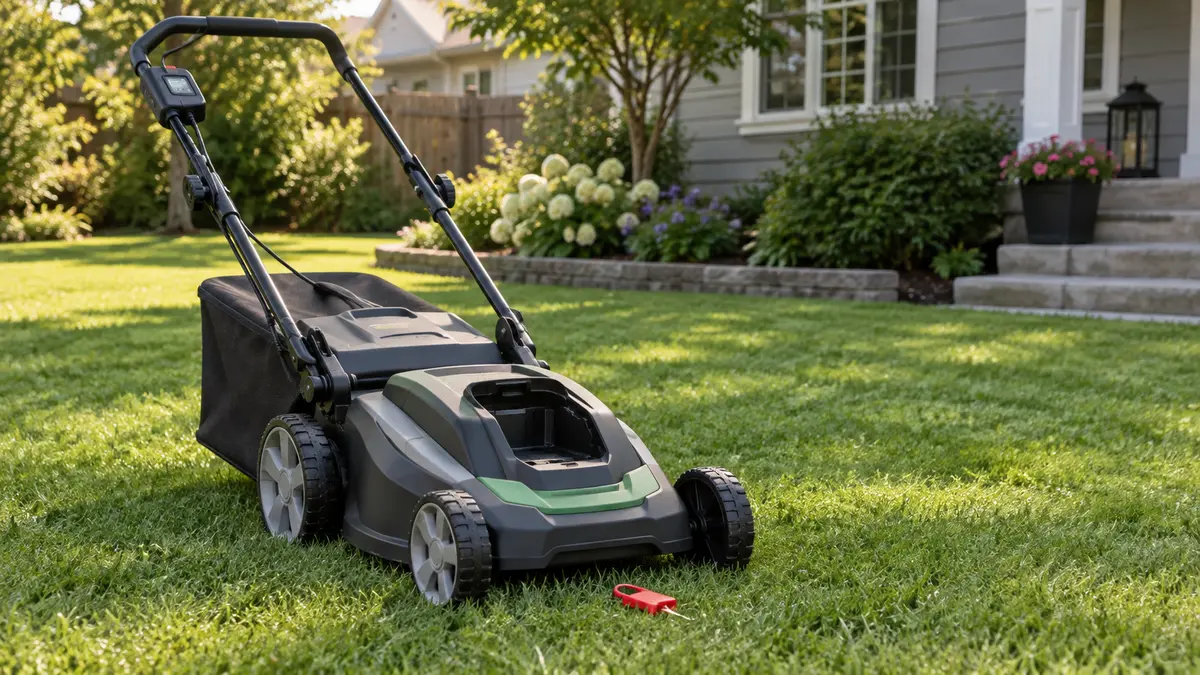
The first lawn-mower measurement I would take is not the size of the yard. It is the width of the narrowest gate between the shed and the grass.
A wide deck saves time only if you can actually get the machine where it needs to go.
Mower types to compare
Match the mower to your mowable area, slopes, storage space and access points. Bigger is not always faster in a tight yard.
Map the yard before choosing the power source
Think about actual mowable area, slopes, trees, flower beds, narrow strips and rough ground.
A small open rectangle and a small yard with fifteen obstacles are not the same mowing job.
Battery mowers make a lot of sense for ordinary residential lawns
They are quiet, easy to start and have very little routine engine maintenance.
Runtime depends on battery capacity, grass height, moisture, self-propel use and how hard the mower is working. Treat the advertised runtime as a useful comparison point, not a guarantee that your jungle will be finished on one charge.
If you already own other yard tools on the same battery platform, that can be a major advantage.
Gas still has a place
Gas mowers are easy to refuel quickly and remain useful for larger properties, heavy growth and long sessions where stopping to recharge would be annoying.
The tradeoff is fuel, oil, noise, storage and engine maintenance.
Corded electric is underrated inside its limits
If the yard is small, open and close to an outlet, a corded mower can be inexpensive, light and effectively unlimited in runtime.
The cord is the entire catch.
If your yard has trees, fences and landscaping, managing a long extension cord while mowing can turn a simple job into interpretive dance.
Self-propel is valuable on slopes and larger lawns
On a flat postage-stamp lawn, self-propel may just add weight and cost.
On hills or a larger yard, it can make a huge difference in fatigue.
Try the speed control if possible. Some systems are wonderfully natural. Others seem to have two modes: sleeping turtle and airport baggage cart.
Cutting width is a tradeoff
Wider decks cover more grass per pass.
They are also heavier, harder to turn and less convenient around tight landscaping.
Measure gates, shed doors and storage space before you celebrate a giant deck.
Height adjustment should be easy to repeat
Single-lever height adjustment is convenient, but whatever system the mower uses should feel solid and keep the deck level.
If you change height seasonally, make sure the adjustment markings are understandable enough that you can return to a previous setting without guessing.
Bagging, mulching and side discharge
Mulching is convenient when conditions allow because clippings stay on the lawn.
Bagging is useful for leaves, heavy clippings or when you want a very clean finish.
Side discharge can handle heavier growth without filling a bag every ten minutes.
Look at how easy it is to switch modes and whether the chute or bag stores neatly.
Storage matters more with a mower than with almost anything else
Measure the shed, garage or wall space.
Some battery mowers fold vertically, which can be fantastic in a small garage. Gas mower storage can have different restrictions because of fuel and engine fluids, so follow the manual.
Safety is not optional yard trivia
Inspect the lawn before mowing, keep people and pets away from the mowing area, and use guards and safety devices exactly as intended.
The CPSC has lawn-mower safety guidance. CPSC mower safety information is here.
My mower checklist
- Measure gates and storage.
- Estimate mowable area.
- Note slopes and obstacles.
- Choose battery, gas or cord based on that route.
- Add self-propel only if it solves a real problem.
- Make sure blade service and replacement are straightforward.
- Check the rest of your yard-tool battery platform before buying another ecosystem.
If a trimmer is part of the same purchase, our string-trimmer guide covers that separately.
Shop by the criteria that matter
Amazon results change. Check each listing against the criteria in this guide.