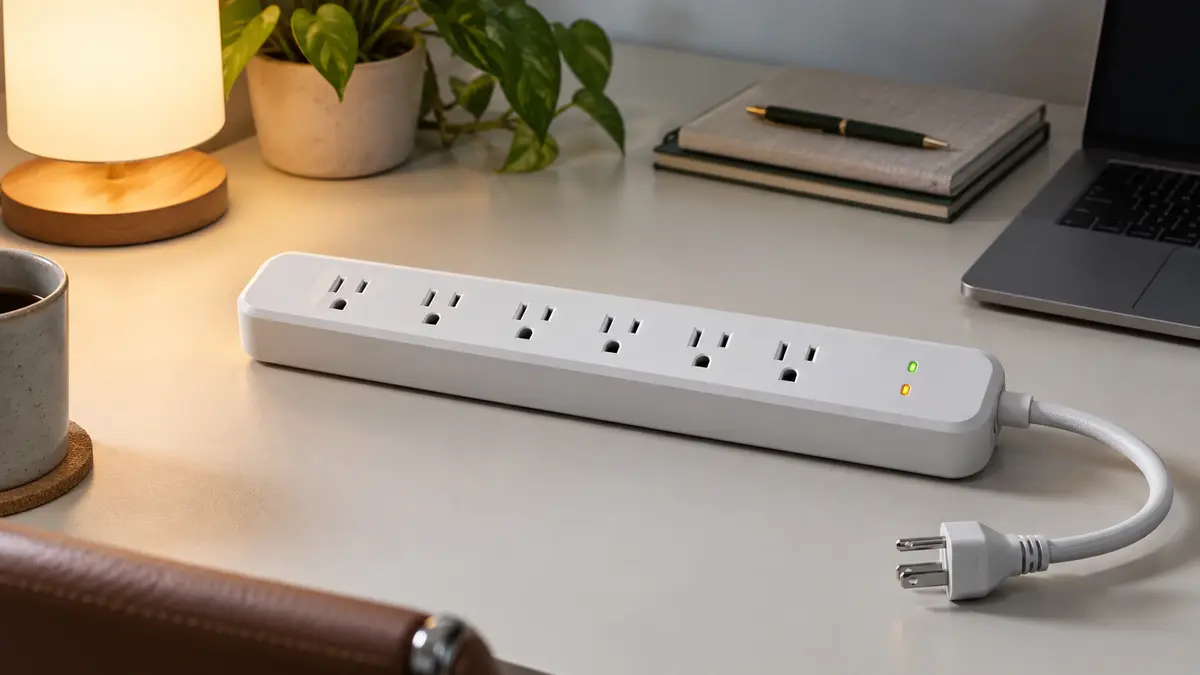
The joule rating on a surge protector is useful, but it is not a magic safety score.
A higher number generally means the protective components can absorb more surge energy over their life. But safety certification, protection status, clamping behavior and how you use the strip matter just as much.
Surge-protector starting points
Verify UL 1449 or another appropriate recognized listing for surge protection. Do not confuse an ordinary power strip with a surge protector.
First make sure it is actually a surge protector
A power strip gives you more outlets. A surge protector adds components intended to limit transient voltage.
If the package talks only about six outlets and a long cord but says nothing about surge protection or an appropriate safety listing, assume it is just a power strip.
How many joules do you need?
There is no single perfect number for every device.
For inexpensive electronics, a lower-rated listed protector may be reasonable. For a computer, television, game console or a group of expensive electronics, I would generally rather have more energy capacity than the bare minimum.
The important part is not pretending that 3,000 joules makes equipment invincible. Surge protectors wear as they absorb events.
Look for a protection-status light
Many surge strips have separate “power” and “protected” indicators.
If the protection light goes out, the outlets may still provide electricity while the surge protection has failed or reached end of life.
Know what the indicator means on your model and replace the strip when the manufacturer says protection is no longer active.
Do not overload the strip
Count electrical load, not just plugs.
High-wattage appliances such as space heaters, portable air conditioners, microwaves and similar loads generally should not be treated like computer accessories on an ordinary power strip. Follow the appliance and strip instructions.
The NFPA has home electrical safety guidance covering extension cords, power strips and overloaded electrical systems. NFPA electrical safety information is here.
Never daisy-chain power strips
Plugging one strip into another is not how you create an affordable home data center.
Use a properly installed receptacle setup that meets your electrical needs.
Outlet spacing matters
Twelve outlets are not very useful when six power bricks cover the other six.
Look at spacing and orientation. A few widely spaced outlets around the edge can be more useful than a huge count packed tightly together.
Cord length and construction matter too
Choose enough cord to reach without tension, but do not hide excess cord under rugs or run it through places where it can be damaged.
Inspect the plug, cord and housing periodically. Replace damaged strips instead of taping them into retirement.
A UPS solves a different problem
A surge protector deals with voltage spikes. An uninterruptible power supply can also provide temporary battery power during an outage.
For a desktop computer, network equipment or anything that needs time to shut down properly, a UPS may make more sense than a basic strip.
Whole-home surge protection is another layer
A service-panel surge protective device can add protection for circuits throughout the home.
It does not mean plug-in protection is never useful. Surge protection is often layered.
Panel work belongs to qualified electrical professionals and applicable code requirements.
My shopping checklist
- Actual surge-protection listing, not just a power strip.
- A useful joule rating for the equipment value.
- Clear protection/end-of-life indicator.
- Enough properly spaced outlets.
- A cord suitable for the location.
- No plan that involves daisy-chaining.
The exact joule number is less important than buying a legitimate protector, using it within its rating and knowing when its protection is gone.
Shop by the criteria that matter
Amazon results change. Check each listing against the criteria in this guide.