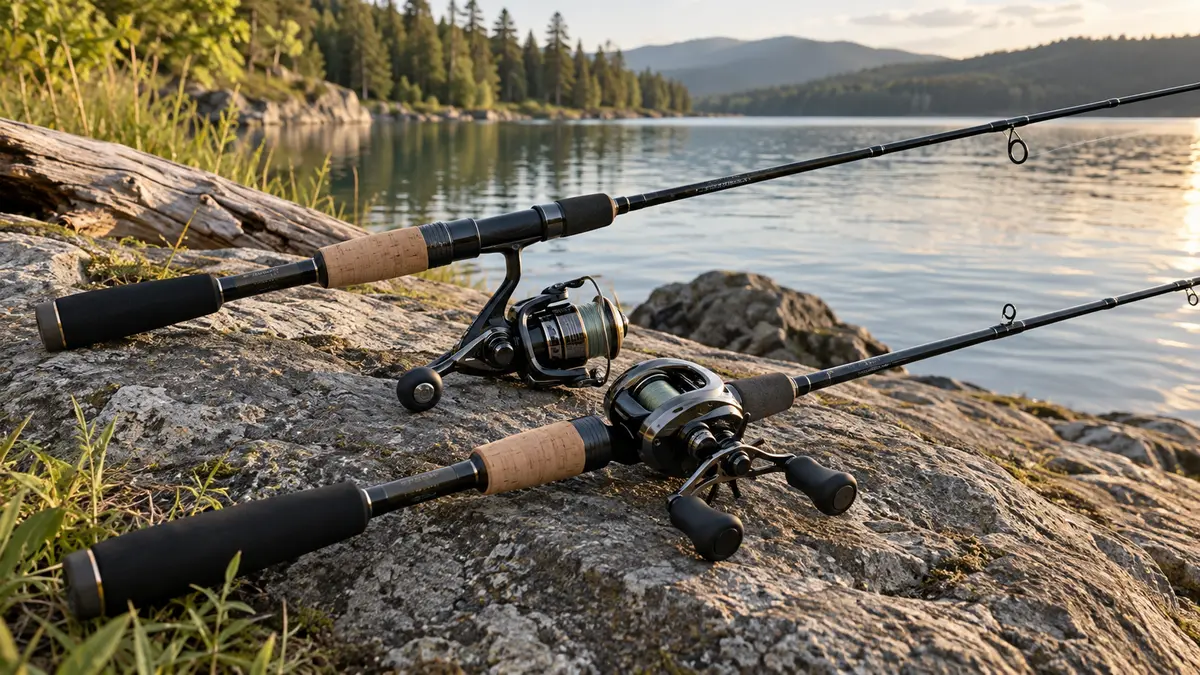
If you are choosing your first fishing rod, spinning gear is usually the easier place to start.
It handles light lures well, the reel hangs underneath the rod and casting is fairly forgiving. Casting gear gives you more control with heavier lures and can be wonderfully accurate once you know how to use it, but the learning curve includes the occasional backlash that turns fishing line into modern art.
Rod types to compare
Match rod power and action to the lure weight, line and species you actually fish.
Spinning gear is easier with light lures
The spool on a spinning reel stays fixed while line comes off it during the cast.
That makes light lures easier to cast and reduces the chance of a severe backlash.
It is a good setup for panfish, trout, finesse bass techniques and general freshwater fishing.
Casting gear gives you control with heavier presentations
On a baitcasting reel, the spool rotates during the cast.
That can provide excellent accuracy and direct control, especially with medium and heavier lures.
It also means spool speed has to stay matched to the lure. When it does not, the line keeps coming off after the lure has slowed down. Hello, bird’s nest.
Rod power is not the same as rod action
Power describes how much force it takes to bend the rod. Light, medium, medium-heavy and heavy are common labels.
Action describes where the rod bends. A fast-action rod bends mostly near the tip. A slower-action rod bends farther down the blank.
Those terms matter because they affect casting, lure control and how the rod handles a fish.
A 7-foot medium spinning rod is a versatile starting point
For general freshwater use, a 6’6" to 7-foot medium or medium-light spinning rod covers a lot of normal fishing.
Exact choice depends on lure weights, line and target species.
Check the manufacturer’s recommended lure and line ranges printed on the rod.
Medium-heavy casting rods suit many bass techniques
A 7-foot medium-heavy fast-action casting rod is common for heavier bass lures, jigs and rigs where you want more backbone.
That does not make it the universal fishing rod. It is just a very common tool for a particular family of jobs.
Longer rods give you leverage and casting distance
They can also be awkward in brush, small boats and car interiors.
If you hike to tight streams, a shorter rod can be much nicer to live with.
Handle length changes comfort and casting
A longer rear grip gives you leverage for two-handed casts. It can also bang into your forearm or clothing when you are working a lure with short wrist movements.
Hold the rod with the reel attached if possible. The balance changes dramatically once the reel is there.
One-piece versus two-piece
One-piece rods eliminate a joint and are common when maximum sensitivity and simple construction matter.
Two-piece rods are much easier to transport and modern ferrules can perform very well.
If a one-piece 7-footer will not fit in your vehicle, that is a pretty decisive specification.
My quick choice
Choose spinning if you are new, use light lures or want a forgiving general-purpose setup.
Choose casting if you use heavier lures and want more casting control, and you are willing to learn spool tension and braking.
Then match the rod’s power, action and lure range to the fishing you actually do. The reel type is only the first branch of the decision.
Shop by the criteria that matter
Amazon results change. Check each listing against the criteria in this guide.