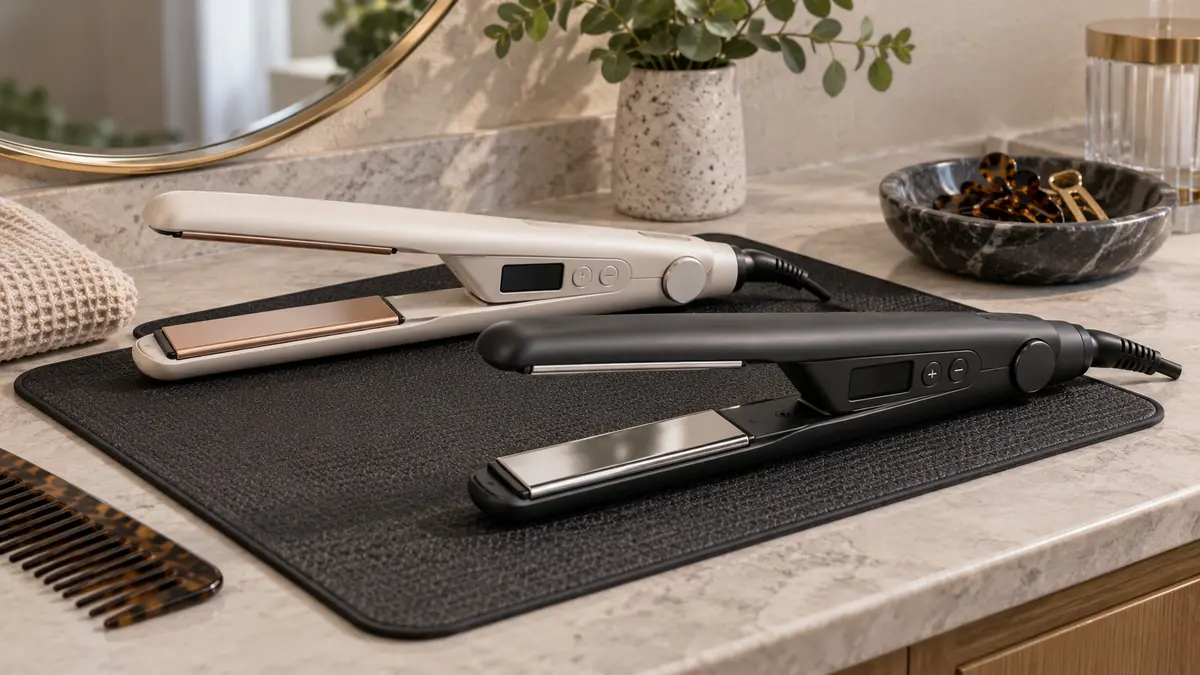
Ceramic versus titanium sounds like the big flat-iron decision. It is not quite that simple.
Temperature control, plate alignment and how many passes you need matter more than the material name printed in giant letters on the box. Ceramic tends to spread heat evenly and can feel forgiving at moderate temperatures. Titanium heats quickly and holds heat well during repeated passes.
Flat-iron styles to compare
Look for adjustable temperature and smooth, aligned plates. Use the lowest heat that gets the job done for your hair.
Ceramic is a sensible default for moderate heat
Ceramic plates tend to distribute heat evenly and are common on irons intended for a broad range of hair types.
Some products use solid ceramic plates. Others use a ceramic coating over metal. That distinction matters because coatings can wear over time.
If the listing simply says “ceramic technology” without explaining what the plates actually are, I would keep reading.
Titanium gets hot quickly
Titanium plates transfer heat efficiently and can maintain high temperatures during repeated passes.
That can be useful for thick, coarse or very resistant hair when a stylist or experienced user knows how much heat is appropriate.
It also means less room for careless heat. Faster and hotter is not automatically healthier for hair.
The temperature dial matters more than the top temperature
I would rather have accurate, repeatable lower settings than a flat iron that brags about reaching a temperature I should probably never use.
Hair that is bleached, chemically treated, fine or already damaged may need much more conservative heat than thick, healthy hair.
The American Academy of Dermatology recommends limiting excessive heat and using the lowest heat setting that achieves the desired result. AAD healthy-hair guidance is here.
Plate width changes how the tool handles
A 1-inch plate is the versatile choice. It can straighten, work close to the roots and curl or wave if the outer edges are rounded.
Wider plates can speed up long, thick hair because they cover more area per pass.
They are also clumsier on short hair, bangs and tight curls near the scalp.
Floating plates should make better contact, not wobble around
Many irons mount the plates with a little movement so they can stay in contact as the tool closes.
That is useful when the plates remain aligned. If they rock so much that the hair catches at the edge, the feature has missed the point.
Smooth glide matters
Run a small section of hair through the tool at a conservative setting.
If the iron snags, pulls or needs extreme squeezing pressure to maintain contact, plate material is no longer the interesting issue.
Clean residue from styling products according to the manufacturer’s instructions. A dirty plate drags and encourages extra passes.
Heat protectant is not magic armor
A heat-protectant product may reduce some heat-related damage, depending on the formulation and use.
It does not make unlimited temperature or repeated passes harmless.
Dry hair fully unless the iron is specifically designed and instructed for damp use. Steam from trapped moisture can create its own problems.
Auto shutoff is worth having
If you have ever driven ten minutes from home and suddenly wondered whether you unplugged the flat iron, you already know why.
Check the shutoff time and whether the feature resets if the tool is bumped or moved.
My quick choice
Ceramic: a good starting point for moderate heat, even heating and general home use.
Titanium: worth considering for faster heat transfer and stubborn hair when you know how to manage the temperature.
Either way, choose adjustable heat, aligned plates and a tool that gets the result with fewer passes. Hair does not care which material won the marketing battle.
Shop by the criteria that matter
Amazon results change. Check each listing against the criteria in this guide.