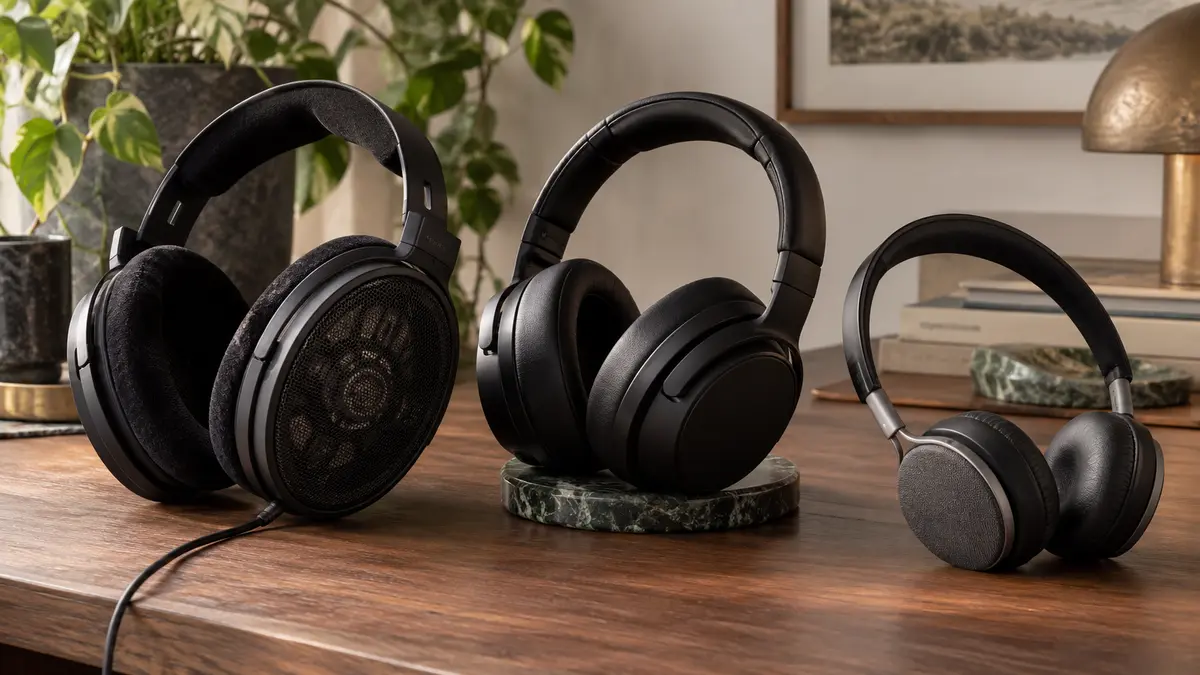
Headphones are speakers attached to something you wear on your head for hours. That second part gets ignored surprisingly often.
A pair can sound wonderful for five minutes and become unbearable once the pads heat up, your glasses dig into your temples or the headband finds one exact spot on your skull and begins negotiations.
Headphone styles to compare
Choose the enclosure for the room and the fit for your head. Wear them longer than a demo song before deciding.
On-ear saves space but puts pressure on the ear
On-ear headphones sit directly on the outer ear.
They are often lighter and more compact than over-ear models, but the clamp pressure is concentrated on cartilage.
Some people can wear them all day. Others want them off after twenty minutes.
Over-ear moves the pressure around the ear
Over-ear pads surround the ear and distribute pressure over a larger area.
They can be more comfortable for long sessions, but they are bigger and often warmer.
If your ears touch the inside of the cup or driver cover, the listed “over-ear” shape may simply be too small for you.
Open-back headphones sound open because they are open
Open-back cups allow air and sound to pass through the rear of the driver.
They can create a spacious, natural sound and are popular for home listening.
They also leak sound out and let room noise in. They are terrible for a quiet office if the person beside you does not want to hear your music.
Closed-back headphones are better when you need isolation
Closed cups block more outside sound and keep more of your audio to yourself.
They are a better fit for commuting, shared spaces and recording situations where sound leakage matters.
The tradeoff is more heat and, depending on the design, a less spacious presentation.
Noise cancelling is best at steady noise
Active noise cancellation is particularly useful for low, steady sounds like airplane engines, HVAC systems and train rumble.
It is less magical with sudden nearby voices and irregular sounds.
Try the ANC with no music playing. Some systems create a pressure sensation that bothers certain people.
Wireless adds convenience and a battery
Bluetooth is wonderful when you do not want a cable snagging on everything.
It also means charging, codec support, microphones, firmware and a battery that eventually ages.
If you plan to keep expensive headphones for many years, check whether the battery or pads can be serviced.
Replacement pads can rescue a good pair
Earpads wear out long before the drivers on many headphones.
Look up replacement-pad availability before buying. Pad material and thickness can change sound as well as comfort, so exact or well-designed replacements are preferable.
Ignore extreme frequency-range claims
Numbers stretching from some subterranean bass frequency to a pitch only a bat would care about do not tell you whether the headphones sound balanced.
Listen to familiar music and spoken audio. Compare at matched volume.
Keep listening levels sensible
Hearing damage is about sound level and exposure time.
The World Health Organization has safe-listening guidance for personal audio. WHO safe-listening information is here.
My one-hour test
- Wear them with your glasses if you use glasses.
- Listen for at least an hour.
- Check jaw, ear and crown pressure.
- Try ANC with and without music.
- Test the microphone if calls matter.
- Switch among your normal devices.
- Price replacement pads and cables.
The right headphones still sound good after the novelty wears off and still feel good when the album ends.
Shop by the criteria that matter
Amazon results change. Check each listing against the criteria in this guide.