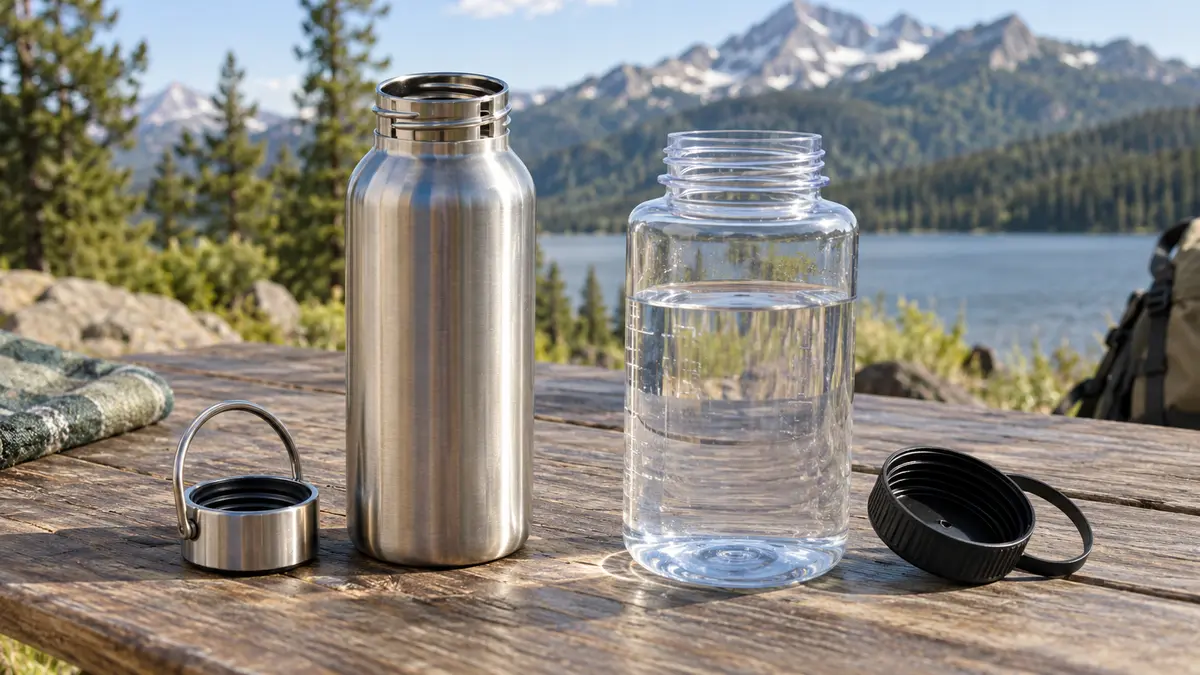
Stainless-steel and plastic water bottles can both be good. They solve different annoyances.
Stainless steel wins when insulation and durability matter. Plastic wins when low weight, low cost and seeing the water level matter more.
Bottle types to compare
Check lid design, bottle diameter, weight and cleaning access. A great bottle you hate washing will not stay great for long.
Insulated stainless steel keeps drinks cold
Double-wall vacuum-insulated steel bottles can keep water cold for hours and prevent condensation from soaking everything around them.
That is a big advantage in a hot car, at work or on a long outdoor day.
The price is weight. A big insulated bottle is fairly heavy before you add thirty-two ounces of water.
Plastic is lighter
A good reusable plastic bottle can weigh a fraction of a steel one.
That matters for hiking, kids’ backpacks, cycling and anyone who already thinks carrying enough water feels like a chore.
Clear or translucent plastic also lets you see exactly how much is left.
Durability is different, not simply better or worse
Steel dents. Plastic scratches.
A dented steel bottle may keep working for years, although a severe dent can affect a vacuum-insulated wall. Plastic can survive drops without denting but may eventually become cloudy, scratched or retain odors.
Either material can last a long time when the lid and seals are replaceable.
The lid is the part I would study hardest
Most bottle frustration comes from the lid, not the cylinder.
Straws stop sealing. Flip caps collect grime. Gaskets disappear into the dishwasher. Complicated lids develop small areas that require a tiny brush and unreasonable patience.
Look for a lid that comes apart enough to clean and replacement gaskets or caps you can actually buy.
Wide mouth versus narrow mouth
Wide-mouth bottles are easier to add ice to and easier to scrub.
They can also deliver an impressive amount of water to your shirt if you drink while walking.
Narrow openings are easier for drinking on the move but harder to reach inside.
A chug cap can give you a smaller drinking opening on a wide-mouth bottle, which is a nice compromise.
Check whether it fits the cup holder
This sounds trivial until your giant bottle spends every car ride rolling around the passenger floor.
Measure the base diameter if vehicle cup-holder fit matters.
Dishwasher-safe claims can be part-specific
The bottle may be dishwasher safe while the insulated body, printed finish, lid or gasket has different care instructions.
Read the actual instructions instead of assuming the whole assembly follows one rule.
Plastic material claims deserve specificity
If you want a BPA-free plastic bottle, look for that explicit claim from the manufacturer.
Do not treat “BPA-free” as a complete health grade for every possible use. Use the bottle within its stated temperature and beverage limits and replace damaged products.
Flavor matters too
Some people notice a metallic taste from certain steel bottles. Others notice retained flavors in plastic.
Wash a new bottle before using it and give it a few normal days. If plain water still tastes like yesterday’s sports drink, that is a real usability problem.
My quick choice
Stainless steel: better if you want cold water, rugged daily use and no condensation.
Plastic: better if weight, price and visibility matter most.
Then choose the simplest lid you will happily wash. That little piece of plastic and silicone will probably determine whether you still like the bottle a year from now.
Shop by the criteria that matter
Amazon results change. Check each listing against the criteria in this guide.