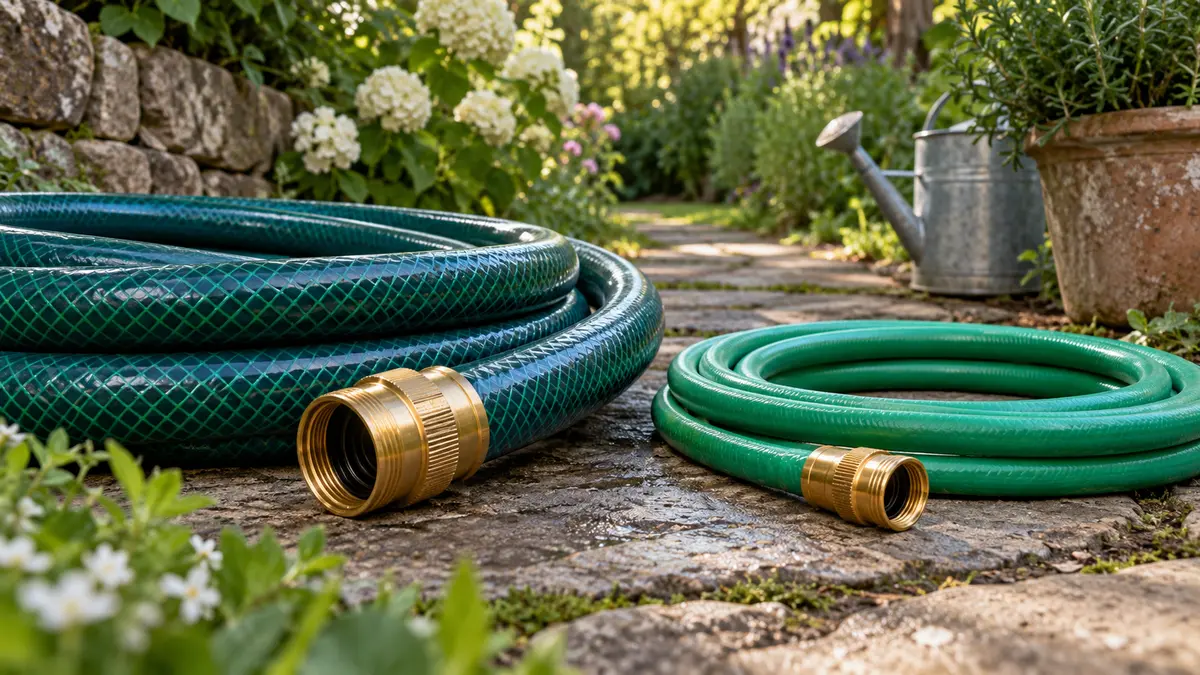
A 3/4-inch garden hose can move more water than a 5/8-inch hose. It can also be heavier, bulkier and more annoying to drag across the yard.
For most normal household watering, 5/8 inch is the sensible default. Move up to 3/4 inch when high flow over a longer distance actually matters.
Common hose sizes to compare
Length, fittings and source pressure affect real flow too. Do not choose diameter in isolation.
5/8 inch is the everyday size for a reason
It balances water flow, weight and ease of handling well enough for washing cars, watering gardens, filling buckets and running ordinary sprinklers.
If the hose is 25 or 50 feet and the job is normal residential watering, 5/8 inch is usually where I would start.
3/4 inch is for jobs that benefit from more flow
A larger inside diameter creates much more cross-sectional area, which can help maintain flow over longer runs.
That matters when filling a pool, feeding larger sprinklers, moving a lot of water or running long distances from the spigot.
The price is weight. A 3/4-inch hose full of water is a much more substantial object to drag around.
Length quietly steals performance
Longer hoses create more friction loss.
If you only need 25 feet, do not buy 100 feet because it seems more flexible for future projects. You will pay for that flexibility every time you coil it, carry it and run water through it.
The fittings are where cheap hoses tell on themselves
Look closely at the couplings.
Sturdy metal fittings, strain relief near the ends and replaceable washers are all useful. Thin fittings that deform easily can turn a perfectly good hose body into a leaky nuisance.
If the hose leaks at the spigot, replace the washer before assuming the entire fitting is bad. That tiny rubber ring solves a surprising number of “broken hose” problems.
Burst pressure is not the same as normal working pressure
A huge burst-pressure number looks impressive, but it tells you about failure under extreme pressure, not what the hose feels like or how it performs every day.
Pay more attention to the hose’s intended use, temperature limits and normal pressure guidance.
Material changes handling
Traditional rubber hoses are often durable and flexible but heavy.
Vinyl is light and inexpensive but can kink more easily depending on construction.
Hybrid polymer hoses try to split the difference and are popular because they stay flexible without weighing as much as heavy rubber.
The exact construction matters more than the marketing category.
Reels need to fit the hose too
A 3/4-inch hose takes up more room on a reel than a 5/8-inch hose of the same length.
Check the reel’s capacity for the actual diameter. Otherwise you may buy a larger hose and discover the last twenty feet live permanently on the garage floor.
For vegetable gardens, check drinking-water claims carefully
If potable-water or food-garden use matters to you, choose a hose specifically labeled and rated for that purpose.
Do not assume every garden hose is designed for drinking water simply because water comes out of it.
My quick diameter rule
- 5/8 inch: normal residential watering, car washing, short-to-medium runs.
- 3/4 inch: long runs, high-flow sprinklers, pool filling and jobs where volume matters more than handling.
- 25 feet instead of 50: whenever 25 actually reaches.
The University of Minnesota Extension has practical backyard-watering guidance if your real goal is watering more effectively rather than simply moving more gallons. You can read it here.
Buy enough hose, not the most hose.
Shop by the criteria that matter
Amazon results change. Check each listing against the criteria in this guide.