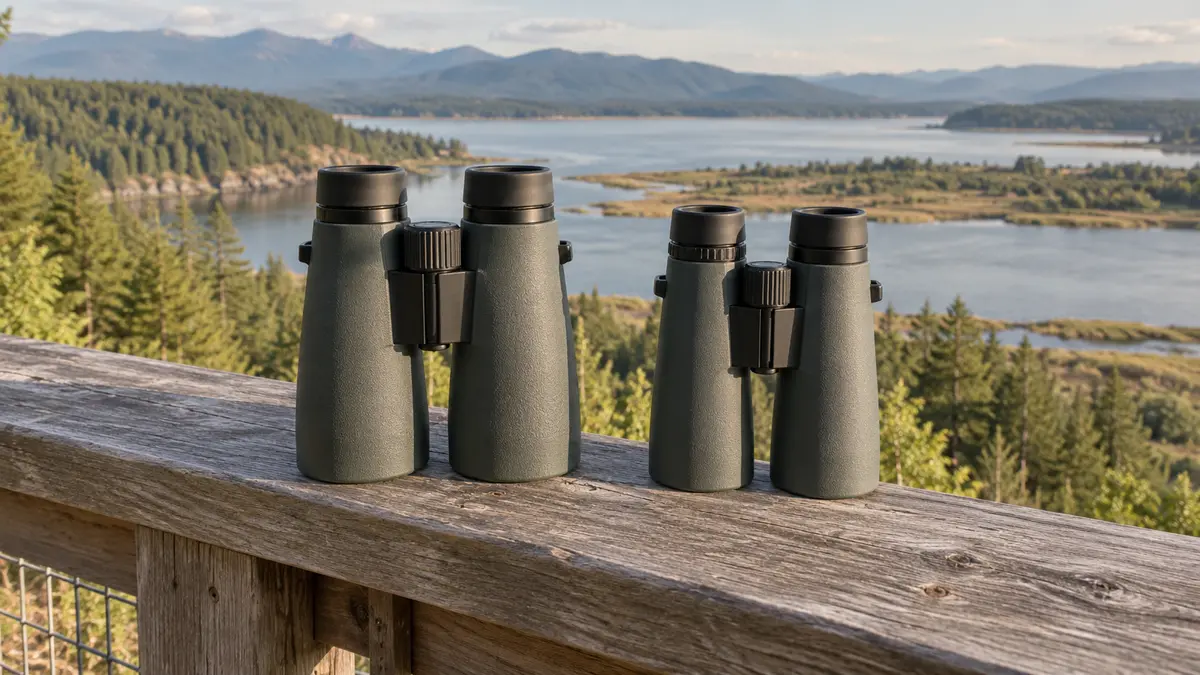
The binocular numbers are easier than they look.
8×42 means 8-times magnification with 42 mm front lenses. A 10×42 gives you more magnification with the same objective diameter.
The trick is that more magnification is not automatically better. It also magnifies your hand shake and usually narrows the field of view.
Useful all-purpose binocular sizes
Field of view, eye relief, weight and focus feel matter along with the two big numbers.
Why 8×42 is such a common recommendation
Eight-times magnification is strong enough to bring birds, wildlife and sports noticeably closer while remaining fairly easy to hold steady.
The 42 mm objectives gather enough light for good performance in many outdoor conditions without making the binocular enormous.
That balance is why 8×42 is a great place to start if you have no idea what you want yet.
What you gain and lose with 10×42
You gain magnification. A distant subject looks closer.
You usually lose some field of view and steadiness. Finding a fast-moving bird can be harder, and small hand movements become more visible.
If your use is mostly distant, stationary subjects, 10× can be terrific. For general birding and scanning, many people prefer 8×.
The second number affects brightness and size
A larger objective can gather more light, but it also adds weight and bulk.
An 8×25 is much easier to carry than an 8×42. It will usually be fussier about eye position and weaker in dim light.
That tradeoff can still be worth it if compact binoculars are the only pair you will actually carry.
Exit pupil is easy to calculate
Divide the objective diameter by the magnification.
An 8×42 has an exit pupil of about 5.25 mm. A 10×42 is about 4.2 mm.
A larger exit pupil generally makes eye placement easier and can help in dim conditions, up to the limit of your own pupil size.
Field of view is one of the most useful specs
Field of view tells you how wide a scene you can see at a given distance.
A wider field makes it easier to find birds, follow action and scan landscapes.
If two 8×42 models are otherwise similar, I would pay real attention to this number.
Eye relief matters if you wear glasses
Eye relief is the distance your eye can be behind the eyepiece and still see the full field.
Glasses keep your eyes farther away, so longer eye relief and good adjustable eyecups are useful.
Try them with your actual glasses.
The focus wheel should feel good
You will use it constantly.
It should turn smoothly without being so loose that you overshoot or so stiff that a tiny bird flies away while you are still cranking.
Set the diopter correctly
The diopter compensates for differences between your eyes.
Follow the manufacturer’s setup procedure once, then leave it alone unless another person uses the binocular.
Waterproofing is worth having outdoors
Waterproof and nitrogen- or argon-filled binoculars resist internal fogging and moisture better than unsealed designs.
That is useful for birding, boating, hiking and any other activity where weather does not ask permission.
The Cornell Lab’s All About Birds has an excellent binocular-selection guide. You can read it here.
My practical starting point
Start with 8×42 for general wildlife and birding. Consider 10×42 when reach matters more than field and steadiness. Consider 8×32 when carrying weight matters enough that a smaller binocular will actually come with you.
Then try the focus, eyecups and grip. The best numbers in the world do not help if the binocular feels awful in your hands.
Shop by the criteria that matter
Amazon results change. Check each listing against the criteria in this guide.