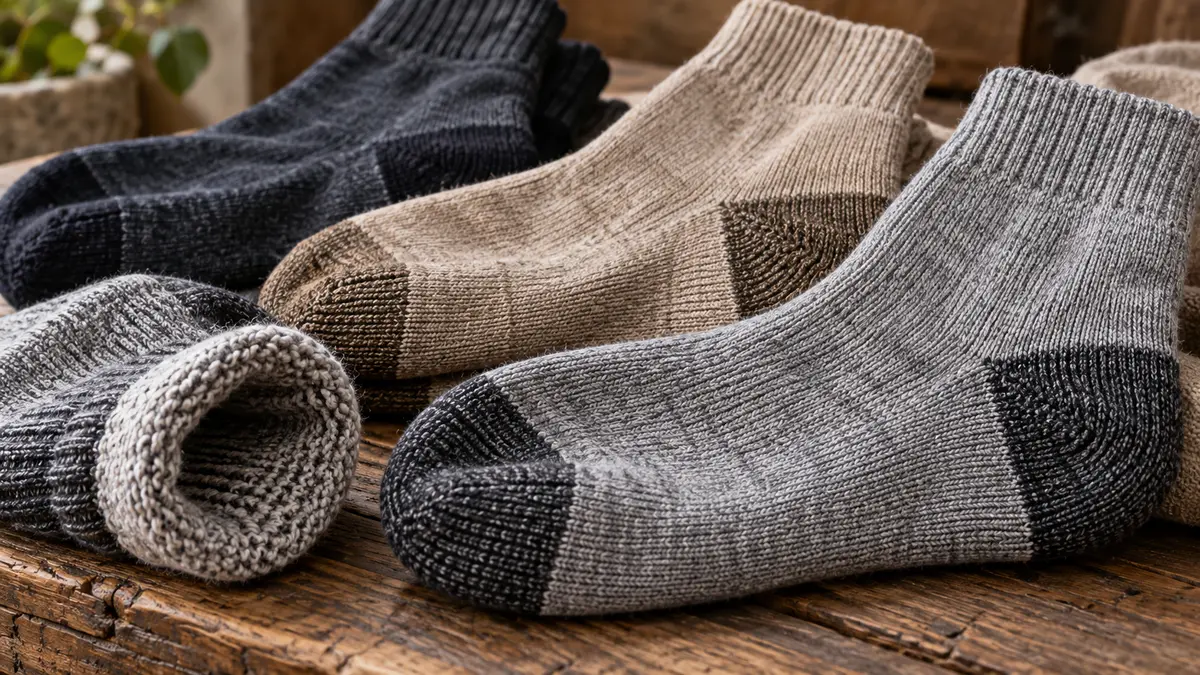
If your socks keep blowing out at the heel, the answer is not necessarily “buy thicker socks.”
Durability usually comes from a combination of fit, dense knitting, reinforcement in the right places and a fiber blend that can handle friction. A sock that is too loose can bunch and rub. One that is too tight stretches the fabric thin before you even put on a shoe.
Durable sock constructions to compare
Check the fiber blend, heel/toe reinforcement and size range. “Premium cotton” by itself does not tell you much.
Turn the sock inside out
The outside is where the branding lives. The inside is where the useful clues are.
Look for denser knitting or extra yarn at the heel and toe. Those are the places that usually wear first.
If the “reinforced heel” looks exactly like the rest of the sock except for a different color, I would not put much faith in the label.
Blends usually outlast pure natural fibers
Cotton feels familiar and comfortable, but cotton by itself is not especially resistant to abrasion.
Merino wool manages moisture and temperature well, but it also benefits from nylon or another durable synthetic fiber when used in socks.
That is why many good work and hiking socks are blends. The fibers divide the jobs instead of asking one material to do everything.
Thickness is not the same as toughness
A thick sock can wear out quickly if the yarn is loose and the heel is rubbing inside the shoe.
A thinner sock with dense knitting and reinforcement can last much longer.
Thickness should match the shoe and the amount of cushioning you want. Durability comes from construction.
Fit the heel correctly
The heel pocket should actually sit on your heel.
If it rides halfway up the back of your foot, the sock may be too large. If it is pulled forward under your heel, it may be too small.
Misplaced fabric means friction is happening somewhere the designer did not expect it.
The shoe may be the thing eating your socks
Before blaming every sock brand, feel inside the shoe.
A rough heel counter, torn lining, seam or exposed edge can chew through socks in the same spot over and over. If five brands all fail at exactly the same place, the shoe deserves an interrogation.
Cuffs should recover without strangling you
A good cuff stays up after repeated washing without leaving an angry trench around your leg.
If the cuff slides down immediately, the elastic is weak or the sock is too large. If it feels painfully tight, a wider or different style is a better answer than hoping the elastic “breaks in.”
Wash them like you want them to last
High heat can be rough on elastic fibers. Fabric softener can also affect moisture handling and performance in some socks.
Follow the care label and avoid turning every load into the hottest possible dryer cycle.
If you want more detail on detergent dosing, see our laundry-detergent guide.
Buy one pair before you buy twelve
This is one of my favorite shopping rules for clothing basics.
Buy one pair. Wear it. Wash it several times. See whether the heel stays put, the cuff stays up and the fabric pills or thins.
If it passes, then buy the drawer full.
The FTC’s textile guidance is useful when you want to understand fiber labels and care information. FTC textile guidance is here.
One more thing: travel compression socks are different
If you are shopping for graduated compression rather than ordinary durable socks, sizing and pressure are a separate issue. See our travel compression-sock guide.
For everyday socks, the best long-life combination is usually boring: correct fit, reinforcement where your feet actually rub, enough synthetic fiber to handle abrasion, and laundry care that does not cook the elastic.
Shop by the criteria that matter
Amazon results change. Check each listing against the criteria in this guide.