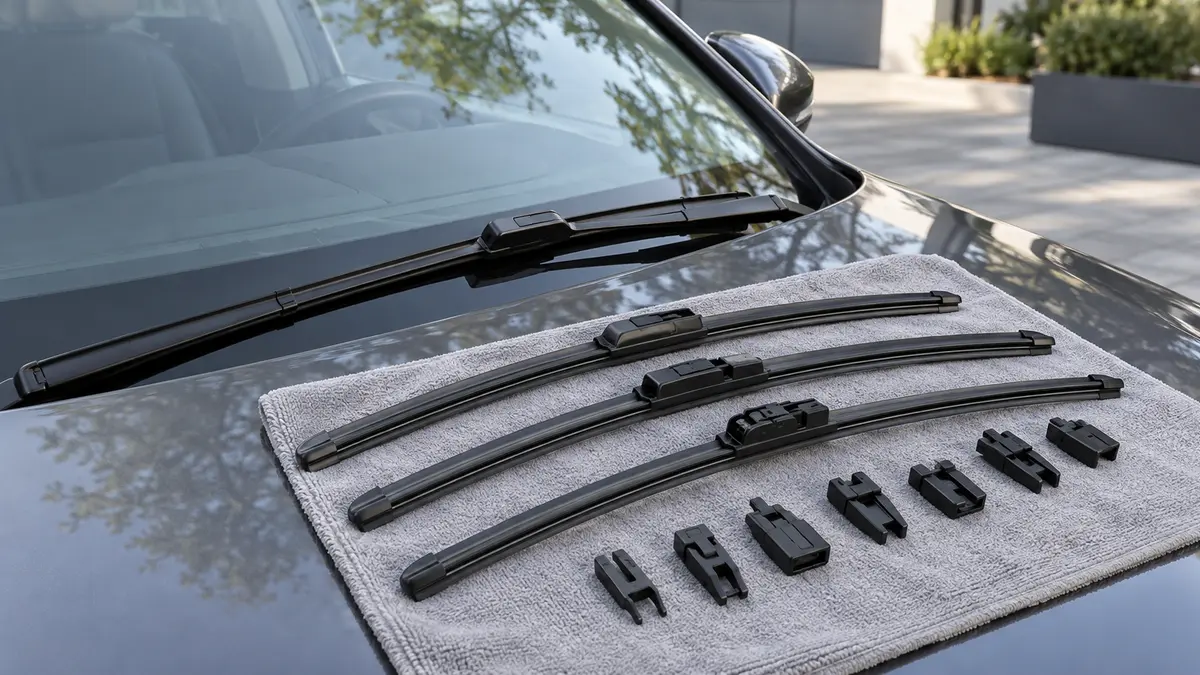
Windshield wipers are fitted parts, not universal strips of rubber.
The driver side and passenger side may use different lengths. The rear wiper may be completely different. The connector matters too. Start with your exact year, make, model and body style before choosing the blade type.
Wiper-blade styles to compare
Verify fitment for the exact vehicle before ordering. Length alone does not guarantee the connector is correct.
Conventional blades are simple and inexpensive
Traditional frame-style wipers use a metal structure with several pressure points along the blade.
They are usually inexpensive and easy to find.
Snow and ice can pack into the frame, which is one reason beam-style blades became popular in winter climates.
Beam blades use a curved spring structure
Beam blades have no exposed external frame. The blade itself is designed to follow the windshield curve.
They tend to handle snow and aerodynamic lift well, but they are usually more expensive than conventional blades.
Hybrid blades split the difference
Hybrid designs use a more traditional internal structure with an aerodynamic outer shell.
They can give you some of the pressure distribution of a frame blade with less exposed hardware.
The connector matters as much as the blade length
Hook arms are common, but there are several other connector styles.
Many replacement blades include adapters. Make sure the exact adapter for your vehicle is included and that it locks positively.
Do not improvise with zip ties, tape or “it seems pretty secure.” This is a visibility part moving back and forth in wind and rain.
Protect the windshield during installation
The bare wiper arm is spring-loaded.
If it snaps down without a blade installed, the metal arm can crack or chip the windshield.
Lay a folded towel on the glass and keep control of the arm while changing the blade.
Chatter is not always a bad blade
Clean the windshield and blade edge first.
Wax, road film, tree residue or a twisted wiper arm can make a new blade chatter too.
If one side of the blade lifts or skips consistently, inspect the arm and connector rather than buying your third set of blades.
Winter blades solve one specific problem
Covered or beam-style winter blades reduce places where snow and ice can pack into the mechanism.
They do not make frozen rubber soft or eliminate the need to clear ice from the windshield before using the wipers.
Rear wipers are often weird little proprietary things
Do not assume the rear window uses the same blade family as the front.
Rear arms and connectors vary widely. Use an exact fitment lookup.
Replace them when visibility is getting worse
Persistent streaks, skipping, torn rubber and sections that no longer touch the glass are all signs that the blade needs attention.
Clean the glass and blade first. If performance still stinks, replace the blade.
NHTSA’s broader vehicle-safety resources emphasize keeping vehicle equipment in proper condition, although wiper fitment itself comes from the vehicle and blade manufacturers. NHTSA vehicle-safety resources are here.
My five-minute check
- Confirm exact vehicle fitment.
- Check driver, passenger and rear sizes separately.
- Verify the connector.
- Clean the windshield.
- Install with the glass protected.
- Test washer fluid and the full sweep before driving away.
Wipers are cheap compared with not being able to see. Buy the right fit and replace them before the rubber is hanging off like a loose shoelace.
Shop by the criteria that matter
Amazon results change. Check each listing against the criteria in this guide.