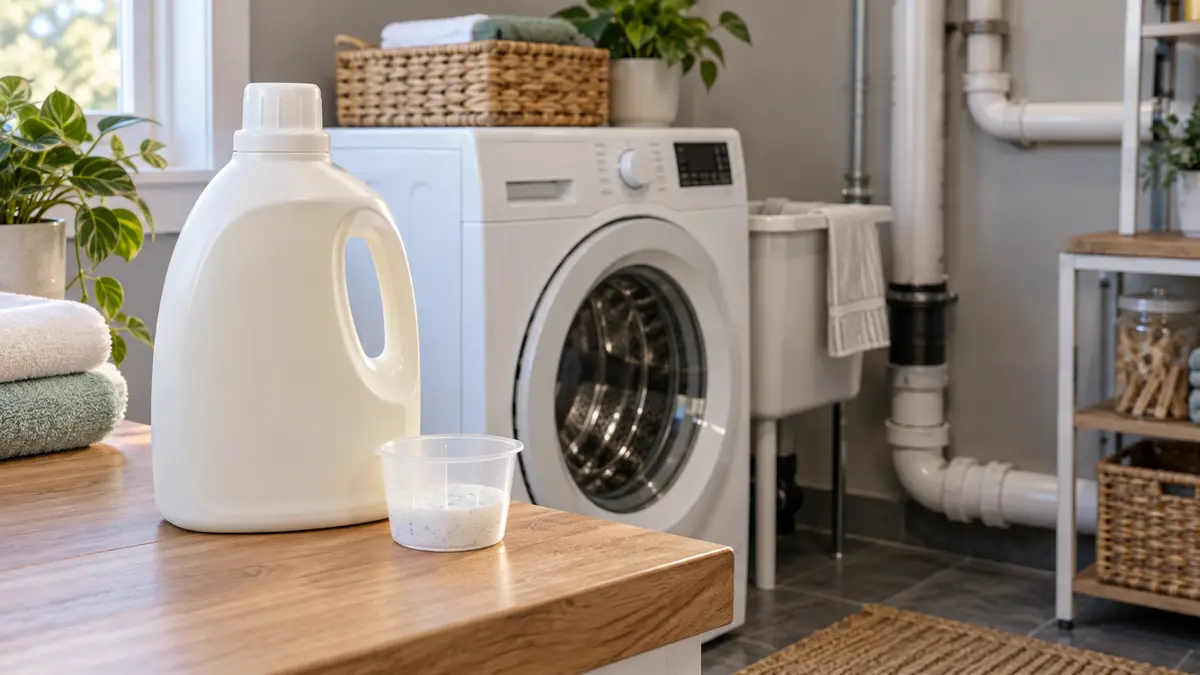
If you have a septic system, laundry detergent is not the thing I would obsess over first. Water volume, correct detergent dose and what else gets poured down the drain matter more than a “septic-safe” badge on the bottle.
A normal amount of a low-sudsing detergent made for your washer is usually the sensible choice. What you do not want is chronic overdosing, huge back-to-back laundry days, or the idea that some magic additive makes an overloaded septic system okay.
Laundry detergent options that make sense for septic homes
These are broad searches. Check the current label for dose, HE compatibility and ingredient information before buying.
What laundry actually does to a septic system
Every wash load sends wastewater into the septic tank. Solids settle, lighter material rises and liquid moves toward the drain field.
The problem with laundry is not that detergent instantly kills the system. It is that several loads in a row can send a lot of water through the tank in a short period. That can reduce settling time and put extra stress on a marginal drain field.
The EPA recommends spreading water use through the week rather than doing all the household laundry in one day. EPA septic-system guidance is here.
Measure the detergent instead of pouring by feel
Concentrated detergent makes it easy to use more than you need. The cap is enormous. The correct dose may be a tiny fraction of it.
Follow the product’s dose for your load size, soil level and water hardness. If clothes come out with detergent residue or the washer is full of suds, adding more next time is unlikely to be the answer.
HE detergent is the obvious choice for an HE washer
High-efficiency machines are designed to work with low-sudsing HE detergent. That matters whether you have septic or municipal sewer service.
Too much foam can interfere with washing and rinsing. It also encourages people to use extra rinse cycles, which means more water headed to the septic system.
Liquid versus powder is not a septic morality test
You will find strong opinions that one form is always better for septic systems. I would not make the decision that way.
A properly dosed HE liquid or powder from a reputable manufacturer can both be reasonable. Pick the form that works in your washer, dissolves well in your water temperature and lets you measure accurately.
Fragrance and dyes are separate questions
If somebody in the household is sensitive to fragrance, buy fragrance-free detergent because of that need. Do not assume fragrance-free automatically means “better for septic.”
Likewise, enzymes are cleaning ingredients. Their presence by itself does not make a detergent septic-hostile.
If you want the broader ingredient discussion, see our laundry-detergent guide.
What not to send down the drain matters more
A septic tank is not a disposal system for paint, solvents, gasoline, pesticides or large amounts of harsh household chemicals.
That is a much bigger concern than whether one sensible load of laundry used liquid or powder detergent.
Do not let “septic treatment” products give you false confidence
A bottle that promises to “boost” or “restore” your septic system does not create extra tank capacity and does not repair a failing drain field.
The EPA says routine septic additives are generally not necessary for a properly functioning system. Maintenance, pumping and water management are the boring answers because the boring answers actually matter.
Space out laundry when you can
If your household does seven loads every Sunday, spreading some of them through the week reduces the amount of wastewater hitting the system at once.
Modern efficient washers help because they use less water per load, but a marathon laundry day is still a marathon laundry day.
My septic-friendly laundry rule
- Use detergent made for your washer.
- Measure the dose.
- Do not use extra detergent because the clothes are extra dirty.
- Spread large amounts of laundry through the week when possible.
- Keep inappropriate chemicals out of the drain.
- Maintain the septic system on schedule.
That is the real answer. You do not need to hunt for a bottle with a picture of a happy septic tank on the front. You need a detergent that cleans at the right dose and a septic system that is not being asked to process the entire household’s water use before lunch.
Shop by the criteria that matter
Amazon results change. Check each listing against the criteria in this guide.