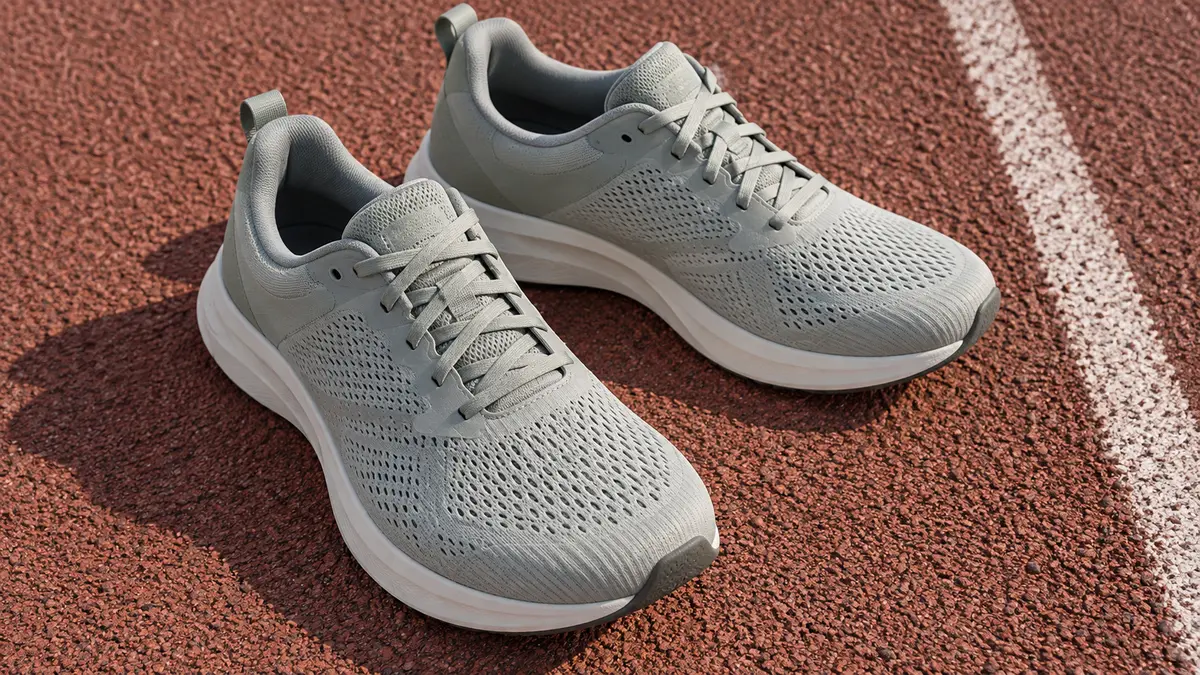
If your running shoes feel too narrow, buying the same shoe half a size longer is usually a bad fix.
You may gain a little space at the front, but the arch, heel pocket and flex point all move forward too. What you actually need is the right length in a wider or roomier shape.
Wide-running-shoe starting points
Width labels vary by brand and model. Check the exact size chart and return policy before buying.
Measure both feet while standing
Feet spread under body weight, so a seated measurement can underestimate what the shoe needs to accommodate.
Measure later in the day if you can, when your feet are closer to the size they reach after being up and moving.
Fit the larger foot. You can fine-tune the smaller one with lacing.
Wide and high-volume are not the same thing
A shoe can have a broad toe box but feel tight over the top of the foot. Another can be roomy vertically while still pinching the forefoot.
This is why width letters alone are not enough. Pay attention to where the pressure actually occurs.
Your toes should have room to spread
A good running fit gives the toes enough room to move naturally without letting the entire forefoot slide around.
Your longest toe also needs some space in front because feet move and swell during a run.
Do not mistake a loose, sloppy fit for a properly wide shoe. The midfoot and heel should still feel secure.
The heel does not need to get wider just because the forefoot does
This is a common frustration for wide-foot runners.
You find a shoe that finally gives your toes room, but now the heel feels like a flip-flop.
Try heel-lock lacing first. If the heel still slides excessively, the shoe’s overall shape may simply be wrong for your foot.
Run in them, do not just stand in them
A shoe can feel perfect while you are standing still and reveal pressure after ten minutes of running.
Use a retailer that allows a meaningful try-on or return period. Jog, turn, go uphill and downhill if the shoe is meant for trails.
Look for pressure, rubbing and side-to-side movement.
Do not let pronation labels replace fit
Stability features can be useful for some runners, but they should not distract from basic fit.
If you have recurring pain, a significant foot problem or uncertainty about what type of shoe you need, a podiatrist, sports-medicine clinician or knowledgeable running specialist can be more useful than internet shoe tribes.
The American Podiatric Medical Association has general running-shoe guidance. APMA information is here.
Socks change the fit
Try shoes with the type of socks you run in. A thick cushioned sock can turn a just-right wide shoe into a tight one.
If sock durability is also a problem, our durable-sock guide covers construction and fit.
Road and trail shoes solve different problems
Road shoes usually prioritize smooth cushioning and low weight.
Trail shoes add outsole grip, protection and often a more secure upper. That can make them feel tighter even in the same nominal width.
Do not assume the wide version of your road shoe will feel the same as the brand’s wide trail model.
My wide-foot checklist
- Correct length first.
- No side pressure on the forefoot.
- Toes can spread.
- Heel stays controlled.
- Arch and flex point feel like they are in the right place.
- No upper pressure over the top of the foot.
- Test while actually moving.
A width letter gets you to a shelf. The right shape is what gets you through a run without thinking about your feet every thirty seconds.
Shop by the criteria that matter
Amazon results change. Check each listing against the criteria in this guide.