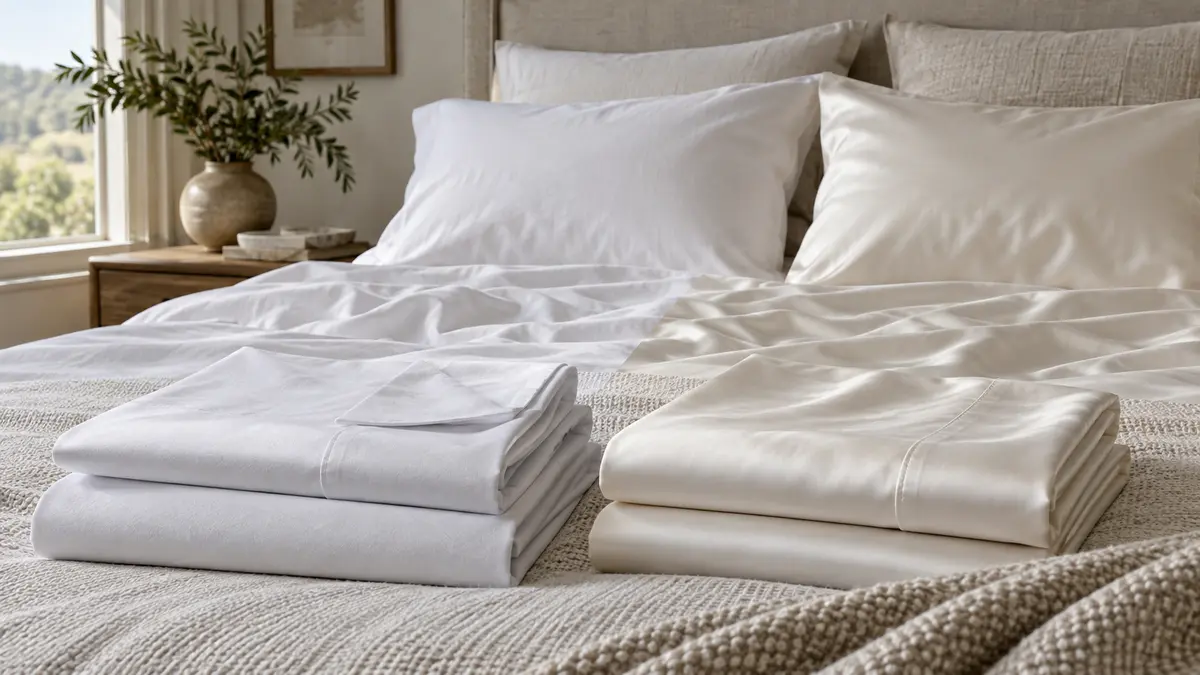
Thread count is probably the most successful distraction in the sheet business.
A 1,000-thread-count sheet is not automatically softer, cooler or more durable than a good 300-thread-count sheet. The number can be useful when you are comparing similar fabrics, but fiber, weave, yarn quality and fabric weight matter at least as much.
Three sheet types worth comparing
Check fiber content, weave, pocket depth and care instructions. Do not choose by thread count alone.
Start with the fabric you actually like sleeping on
Cotton is the easy default. It is breathable, familiar, widely available and can range from crisp to silky depending on the weave.
Linen has a looser, textured feel and tends to breathe well. It wrinkles enthusiastically. If that bothers you, linen will not suddenly become a smooth hotel sheet because you paid more for it.
Lyocell and similar regenerated-cellulose fabrics can feel smooth and drapey. They are popular with people who dislike the crispness of percale.
Polyester microfiber is inexpensive, smooth and resistant to wrinkling. It can also feel warmer and less breathable than lighter natural-fiber options.
Percale and sateen feel different
This distinction is more useful than obsessing over a hundred points of thread count.
Percale uses a simple over-under weave. It usually feels crisp, matte and relatively airy.
Sateen uses a weave that puts more yarn surface on one side. It tends to feel smoother, softer and a little heavier.
If you love crisp hotel-style sheets, start with percale. If you like a silkier, drapier feel, start with sateen.
What thread count can tell you
Within similar cotton sheets, thread count gives you some information about fabric density. It is not a universal quality score.
Very high numbers can be created by counting multiple plies in the yarn, which makes comparisons messy. I would rather buy a well-made 250 to 400 thread-count cotton percale from a brand that explains its materials than a mystery 1,200-thread-count set whose main qualification is a giant number on the package.
The FTC has labeling requirements for textile fiber content that are more useful than marketing adjectives. FTC textile-labeling guidance is here.
Measure your mattress, especially if it is thick
“Queen” tells you the length and width. It does not tell you whether the fitted sheet can handle your mattress plus a topper.
Measure the mattress from the bottom edge to the highest point, including any topper that stays on the bed. Then compare that with the fitted sheet’s stated pocket depth.
A sheet that technically reaches the bottom but spends every night trying to launch itself off the corner is too shallow for the job.
Full-perimeter elastic is worth looking for
Some fitted sheets use elastic all the way around. Others use it mainly at the corners.
On thick or adjustable mattresses, stronger full-perimeter elastic can help keep the sheet tucked.
Expect the sheets to change after washing
Store-display softness is not the final version of the fabric. Finishing treatments wash out. Cotton may shrink some. Linen usually softens with repeated washing.
That is why the return policy matters. If the brand allows washed returns, use the sheets normally before deciding whether you love them.
Hot sleepers should care even less about thread-count bragging
Dense, smooth sateen can feel wonderful but may sleep warmer than a lighter percale. If overheating is your main problem, our sheet guide for hot sleepers focuses specifically on airflow and fabric weight.
My quick sheet-buying order
- Pick the fiber you want.
- Pick the weave you like.
- Make sure the fitted sheet is deep enough.
- Look at thread count only as one clue among similar products.
- Check the return policy after washing.
That order is much harder for marketing departments to exploit than “bigger number must be better.”
Shop by the criteria that matter
Amazon results change. Check each listing against the criteria in this guide.