An exercise bike that does not fit eventually becomes an expensive place to hang clothes.
The screen, classes and leaderboard all come after the basic question: Can you adjust the bike so your legs, hips, back and arms are comfortable enough to keep using it?
The three common bike styles
Check user-height range, step-through height, seat adjustment and maximum user weight before buying.
Upright bikes are the general-purpose option
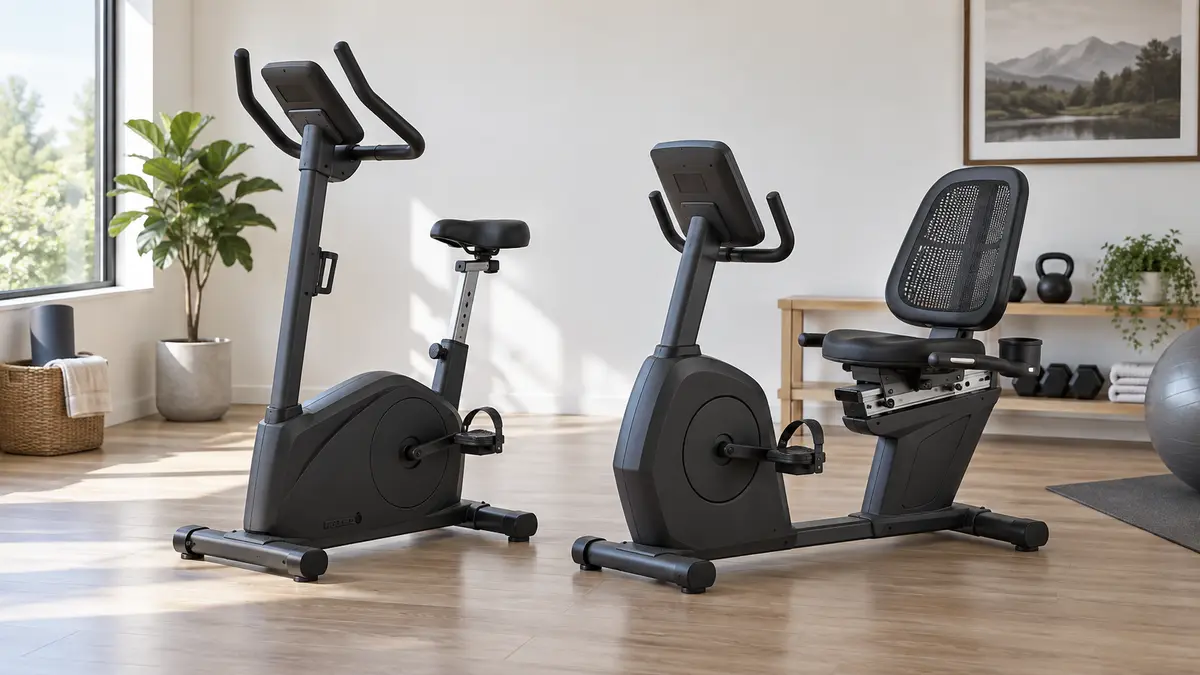
An upright exercise bike puts you in a fairly vertical position with the pedals below you.
They are compact and familiar, and they work well for general indoor cardio.
Indoor-cycle bikes feel more like road cycling
These usually put the rider in a more forward position with a heavier flywheel and narrower saddle.
They are popular for interval workouts and class-style riding.
If you already dislike leaning forward on a real bike, a spin-style bike may not suddenly become fun because it is inside.
Recumbent bikes prioritize support and easy access
A recumbent bike gives you a larger seat with back support and pedals positioned more forward.
That can be easier for people who prefer a supported posture or have trouble getting on and off a higher saddle.
Check the step-through opening carefully if mobility is one of the reasons you are considering one.
Set the seat by your leg, not by the number on the post
At the bottom of the pedal stroke, your knee should still have a slight bend rather than locking completely straight.
If your hips rock side to side to reach the pedals, the seat is too high or too far away.
Make sure the adjustment range covers every person who will use the bike.
Magnetic resistance is quiet and low maintenance
Magnetic systems adjust resistance without a friction pad rubbing directly on the flywheel.
That usually means less wear and a quiet ride.
Friction resistance can be simple and inexpensive, but pads wear and may make more noise.
Air-resistance bikes get harder as you pedal faster and move a lot of air, which is either refreshing or obnoxious depending on your opinion of a fan pointed at your face.
Flywheel weight is not a complete quality score
A heavy flywheel can make the pedal stroke feel smooth, but bearing quality, frame stiffness and resistance design matter too.
Do not buy a bike because one number is huge.
Stability needs a real test
Pedal hard. If the bike allows standing, stand briefly. See whether the frame rocks or the handlebars twist.
Leveling feet are useful on imperfect floors.
If the bike lives upstairs, remember that the listed machine weight has to get up there somehow.
Subscriptions are optional until the bike says otherwise
Some bikes work perfectly well without a monthly service. Others lose much of their appeal when the subscription ends.
Find out what still works if you cancel. Can you control resistance? See basic metrics? Use your own tablet?
Noise is more than the drivetrain
A belt drive can be quiet while a loose plastic cover rattles like a grocery cart.
Listen for pedal clicks, seat creaks and console vibration too.
Start within your health limits
If you are new to exercise or have medical concerns, get appropriate professional guidance before jumping into a hard training program.
ACSM has general physical-activity resources and guidance. ACSM resources are here.
My ride-before-you-buy list
- Adjust the seat for your leg length.
- Try several resistance levels.
- Check handlebar reach.
- Listen for noise.
- Test stability.
- Check the step-through height.
- Confirm what works without a subscription.
- Measure the room and doorway before delivery day.
The bike you keep riding is better than the bike with the most impressive screen.
Shop by the criteria that matter
Amazon results change. Check each listing against the criteria in this guide.