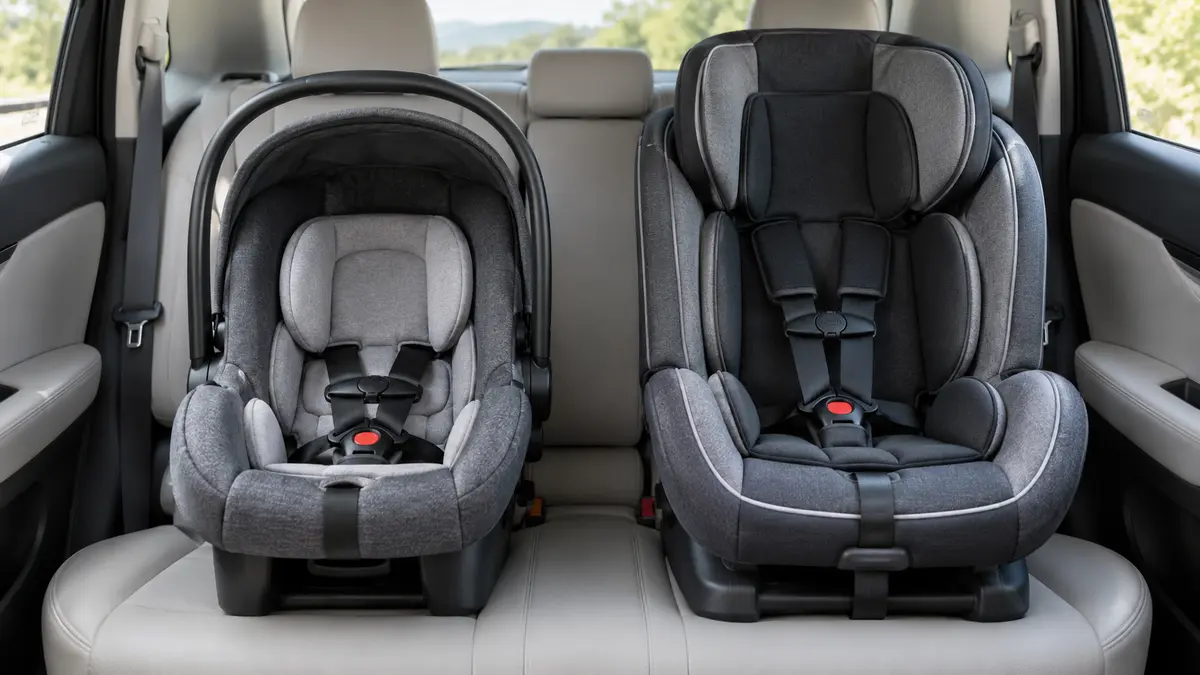
An infant car seat and a convertible car seat can both be appropriate first seats when the specific model fits the child and vehicle. The big difference is not that one category is “safer.” It is how you live with the seat every day.
An infant seat gives you a removable carrier. A convertible seat usually stays installed in the car and can be used rear-facing for a longer portion of the child’s growth range, depending on the model.
The two seat types to compare
Always verify current height and weight limits, vehicle fit and installation instructions for the exact model. A product search is not a safety recommendation.
Why people love infant seats
The carrier clicks into a base that stays in the car. That means you can buckle the baby indoors, carry the entire seat outside and click it into place.
If the baby falls asleep in the car, you do not have to unbuckle immediately just to move from car to house.
Many infant carriers also connect to compatible strollers. That convenience is genuinely useful during the newborn stage.
The downside is that the carrier gets heavy fast
Even a relatively light infant seat becomes a serious thing to carry after you add a growing baby.
Eventually the child reaches the seat’s stated height or weight limit, or simply becomes awkward to carry in it, and you move to another seat.
A convertible seat can stay in use longer
Convertible seats are designed to remain in the vehicle. They typically start rear-facing and later convert to forward-facing when the child meets the seat’s requirements and applicable safety guidance.
You lose the click-in carrier convenience, but you may avoid buying a separate infant-seat stage.
Rear-facing limits matter more than the category name
Current safety guidance recommends keeping children rear-facing as long as possible within the height and weight limits of the car seat.
That means you should compare the actual rear-facing limits and fit of the seat, not just whether the box says infant or convertible.
NHTSA has an excellent car-seat guide that covers choosing, installing and using seats by age and size. NHTSA car-seat guidance is here.
Vehicle fit can settle the argument
A seat that looks compact in a product photo can take up a surprising amount of front-to-back space when installed at the required rear-facing angle.
That matters in small cars and behind tall front-seat occupants.
If possible, test the seat in your actual vehicle before committing. Check the car-seat manual and vehicle owner’s manual together.
Seat belt versus lower anchors
Both installation methods can be appropriate when used exactly as the car-seat and vehicle manufacturers instruct.
Do not use both at once unless the car-seat manufacturer specifically allows it.
The correct installation is the one permitted for that seating position and performed properly.
Harness fit is something you do every ride
The seat can be installed beautifully and still be used incorrectly if the harness is loose, twisted or routed at the wrong height.
Practice adjusting it before the first trip. Make sure every caregiver can do it too.
Stroller compatibility is convenience, not crash performance
A travel system can make errands easier. That does not make the seat safer in a crash.
Choose the car seat for child fit, vehicle fit and correct use first. Then decide whether stroller compatibility makes your life easier.
Used seats require real history
Do not use a car seat if you do not know its crash history, if it is expired, if required parts are missing or if the manufacturer has recalled it and the issue has not been corrected.
NHTSA’s resources can help you check recalls and find child-passenger-safety assistance.
My practical split
Choose an infant seat if the removable carrier will make the first year easier, especially if you expect frequent short trips or stroller use.
Choose a convertible seat from birth if you are comfortable leaving the seat installed and want to avoid the separate carrier stage.
There is no universal winner. The best first seat is the one that fits your child, your back seat and your exhausted Tuesday-morning routine well enough that you can use it correctly every single time.
Shop by the criteria that matter
Amazon results change. Check each listing against the criteria in this guide.