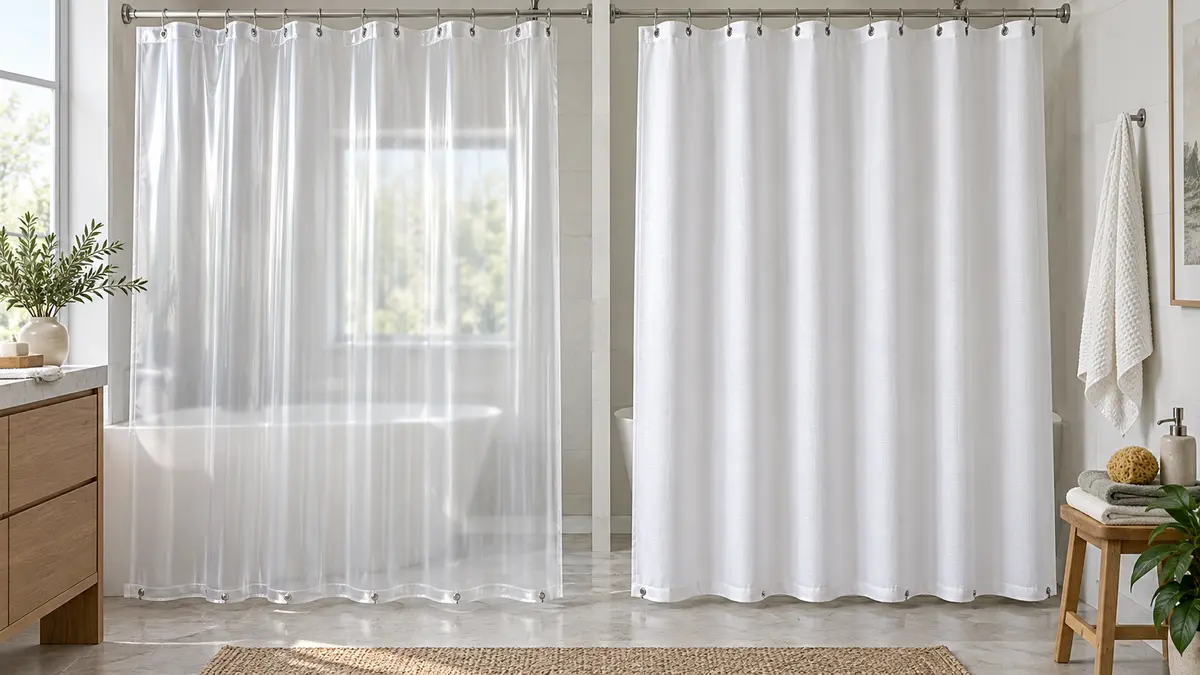
A shower-curtain liner has three jobs: keep water in the tub, avoid wrapping itself around your legs and dry before the bottom edge turns into a science fair project.
You do not need to solve an internet chemistry war to buy one. Measure the shower, pick a material you can clean, and get enough weight that the liner hangs where it belongs.
Common liner styles to compare
Check actual dimensions, material, weight and care instructions. “Non-toxic” by itself is not a useful specification.
Measure before you order another 72 × 72 liner
Seventy-two inches square is common. It is not a law of plumbing.
Measure the width of the rod and the distance from the rod to just inside the tub or shower threshold. You want enough width for gentle folds, but not so much extra material that the liner stays bunched and wet.
The bottom should hang inside the tub far enough to stop spray without puddling on the floor.
PEVA and EVA are common plastic-liner choices
PEVA and EVA liners are flexible, waterproof and inexpensive. They are often marketed as alternatives to PVC vinyl.
If avoiding phthalates is one of your concerns, check the actual material disclosure rather than relying on a green package. The CPSC has information on regulated phthalates in consumer products. CPSC phthalate information is here.
These liners usually wipe clean easily. They can also be light enough to drift inward during a shower unless they have some weight at the bottom.
Polyester is nice if you want something washable
Fabric liners, especially polyester, can feel less plasticky and may go through the washing machine depending on the care label.
They need enough water resistance and drying time to work as the actual liner. Some fabric shower curtains are intended mainly as decorative outer curtains, so check the product description.
Weight matters more than magnets in many tubs
Magnets are helpful only if the tub can actually attract them.
Many modern tubs are acrylic or fiberglass. A magnet in the liner does not become magically useful because the listing says “weighted magnetic hem.”
For those tubs, the overall weight and shape of the bottom edge matter more.
The top header is where cheap liners often give up
Look at the holes or grommets. That is where the liner hangs under tension every day.
Reinforced holes or metal grommets can last longer than thin plastic with simple punched holes, especially if people yank the curtain instead of sliding it politely like civilized adults.
“Non-toxic” is not enough information
If material choice matters to you, look for the exact polymer or fabric and any relevant testing or certifications.
A vague claim that something is “eco-friendly,” “healthy” or “chemical-free” tells you almost nothing. Everything in the bathroom is made of chemicals. The question is which material, used where, under what conditions.
Cleaning is part of the purchase
A liner lives in a warm, wet place. Soap residue and body oils collect at the bottom.
If you want a reusable liner, buy one you can actually clean. Machine-washable fabric is convenient. Plastic liners may need wiping or hand-washing according to the manufacturer.
After showering, spread the curtain out instead of leaving it bunched in the corner. That gives the surface a chance to dry.
Ventilation fixes more than a fancy liner does
Run the bathroom fan if you have one and leave the shower area open enough to dry.
If the room stays damp for hours, every liner is going to have a harder life.
My short list
- Measure the rod width and drop.
- Choose PEVA/EVA if you want a simple waterproof liner.
- Choose washable polyester if easy laundering matters more.
- Look for a reinforced header.
- Use weight, not magnetic marketing, if your tub is not steel.
- Buy a liner you can clean without hating the process.
The right liner is not complicated. It should hang straight, keep the floor dry and survive cleaning. Anything beyond that is mostly packaging.
Shop by the criteria that matter
Amazon results change. Check each listing against the criteria in this guide.