“Non-toxic air fryer” sounds reassuring, but it is not a useful appliance specification. What most shoppers actually want to know is much more concrete: what touches the food, what gets hot, how easy is it to clean, and does the appliance have a decent safety record?
That is how I would shop. Ignore the leaf graphics and wellness language for a minute. Look at the cooking surfaces, coating disclosures, safety certification, temperature range and replacement parts.
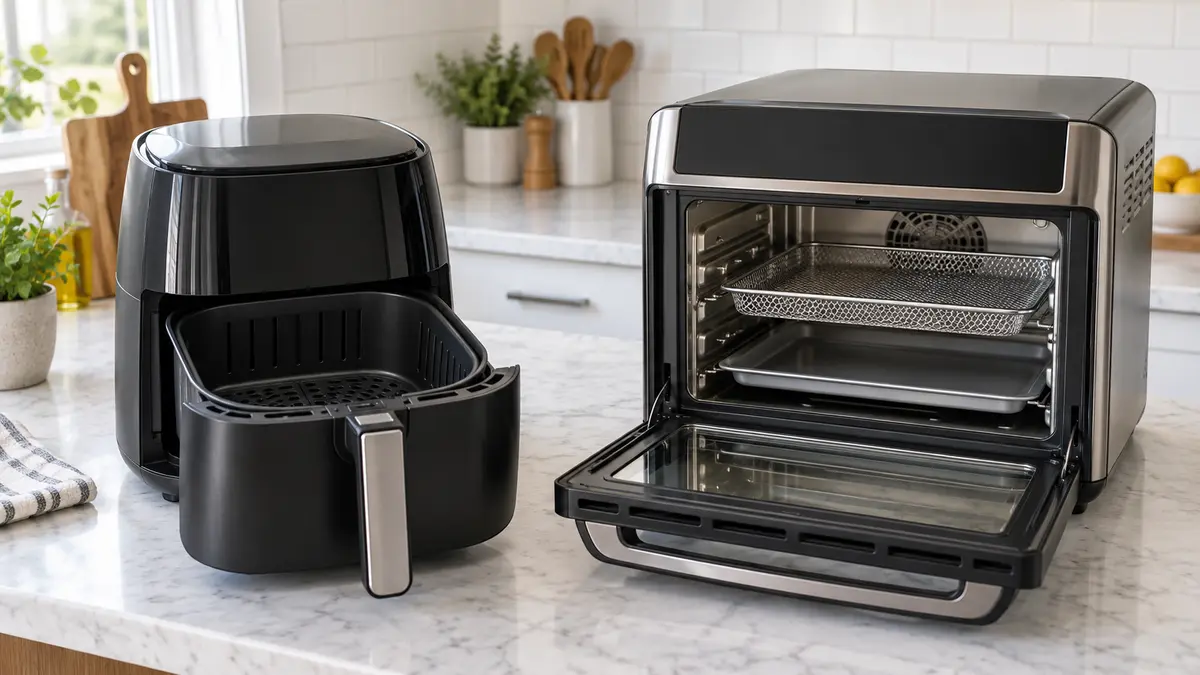
Compare the two common air-fryer styles
These are broad Amazon searches. Check each listing’s food-contact materials, coating details, dimensions and safety information before buying.
Start with the parts that touch the food
Basket air fryers usually have a coated basket or crisper plate. Oven-style models may use metal racks, trays and a crumb tray.
If coating chemistry matters to you, look for a manufacturer that tells you exactly what the coating is and which parts use it. “PFOA-free,” “PFAS-free” and “non-toxic” are not interchangeable statements, and vague wording is not the same thing as a material specification.
If the product page will not tell you what the cooking surface is made from, that is useful information too.
Plastic on the outside is not the same as plastic in the cooking chamber
Air fryers commonly use plastic in handles, housings and controls. That does not mean the food is sitting on hot plastic.
Look at where each material is used. The cooking basket, rack, tray and interior walls matter more than whether the outside shell has a plastic control panel.
Also follow the manufacturer’s clearance requirements. The back and sides of these appliances can get hot, and crowding one against a wall or cabinet is a bad way to save three inches of counter space.
Safety certification beats wellness branding
Look for a recognized electrical safety certification and a clear model number. I also like to search the CPSC recall database before buying a countertop appliance that produces a lot of heat. CPSC air-fryer recall search results are here.
No certification or database guarantees a perfect product, but they tell you more than a green badge invented by the brand’s marketing department.
Basket style is simple and fast
A basket air fryer is usually the easiest choice if you mainly want fries, chicken pieces, vegetables and reheated leftovers.
The basket is close to the heating element, airflow is strong and cleanup is fairly contained. The downside is that capacity claims can be misleading. A deep basket may technically hold a lot of food, but piling everything into a mound defeats the airflow that makes an air fryer useful.
Oven style gives you more shape flexibility
Air-fryer ovens can handle flatter foods, racks, toast and larger pieces more easily. You can see the food through the door on many models.
They also give grease and crumbs more places to hide. Look closely at whether the bottom tray comes out and whether you can reach the walls around the heating area without performing appliance yoga.
Do not buy capacity by the quart alone
Usable surface area matters. A wide 6-quart basket can be more useful than a narrow, deep basket with the same nominal volume because more food can sit in one layer.
Think about what you actually cook. Four chicken thighs need floor space. A pile of frozen fries can tolerate a little more stacking.
Cleanability matters every single time you use it
Grease that is easy to remove on day one becomes baked-on varnish if the appliance is annoying to clean.
Look for removable parts, rounded corners and access around the crisper plate. Dishwasher-safe parts are convenient, but check whether the manufacturer recommends hand-washing coated pieces to extend their life.
Replacement parts are underrated
Baskets, crisper plates and racks take the abuse. If the rest of the appliance still works, being able to buy a replacement cooking part is much better than throwing away the whole machine.
I would search for replacement baskets or trays for the exact model before buying. If the only answer is a sketchy third-party part with no clear fit information, factor that into the decision.
Use the return window
Cook the foods you actually eat. Fill the basket the way you normally would. Check how evenly it browns, how loud the fan is, whether the handle gets uncomfortable and whether cleanup makes you regret dinner.
A good air fryer should make cooking easier. If it takes twenty minutes to clean a five-minute batch of vegetables, that relationship may not last.
The sensible way to shop for an air fryer is not to chase a chemistry-free fantasy. Buy one with clearly described food-contact surfaces, sensible safety credentials, enough usable cooking area and parts you can clean and replace. That is a much more useful definition of “good.”
Shop by the criteria that matter
Amazon results change. Check each listing against the criteria in this guide.