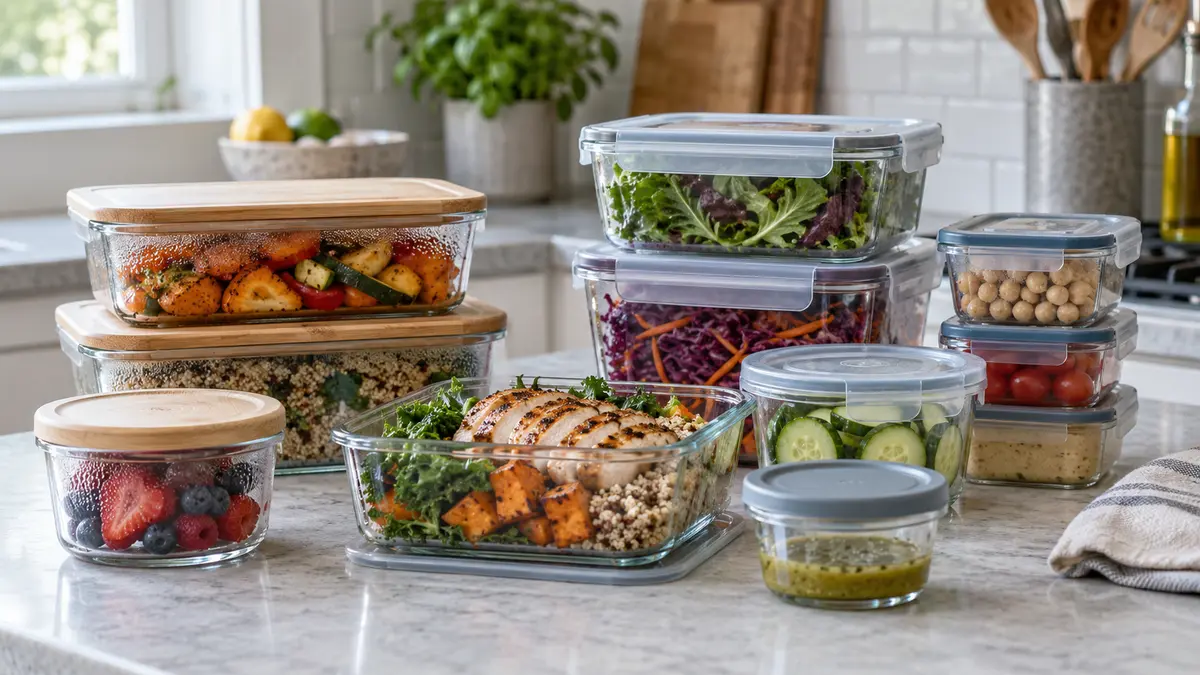
Food-storage containers almost never become useless because the container itself forgot how to be a container. The usual culprit is the lid.
It warps. The hinge cracks. The gasket smells like last Tuesday’s curry forever. One lid disappears into whatever dimension also collects socks, and suddenly three perfectly good glass bases are sitting in the cabinet waiting for a reunion.
So I would buy containers by the lid system, useful sizes and cleaning routine, not by the giant piece count on the box.
Useful container styles to compare
Check whether lids and gaskets are replaceable, and verify microwave, freezer, oven and dishwasher instructions for each part.
Count actual containers, not “pieces”
A 24-piece set often means twelve containers and twelve lids. That is not dishonest, exactly, but it is not how most people think about storage capacity.
Look at the individual sizes. If half the set is tiny condiment cups you will never use, the bargain is not as exciting as it looked.
Glass is great for leftovers you reheat at home
Glass does not stain easily, lets you see what is inside and feels solid in the refrigerator. It is a particularly nice choice for tomato sauce, chili and other foods that can turn clear plastic orange by Wednesday.
The tradeoffs are weight and breakage. A lunch bag full of glass containers gets heavy fast.
Also remember that the lid is usually plastic even when the container is glass. Oven and microwave instructions may apply to the glass base but not the lid.
Plastic wins when weight and drop resistance matter
Plastic is practical for work lunches, kids, picnics and anything that gets carried around all day.
It is lighter and much harder to shatter. Over time it can scratch, stain and absorb odors, especially if it is repeatedly used for oily or strongly colored food.
Use containers only within the manufacturer’s temperature and microwave guidance. The FDA regulates materials intended for food contact, but “food safe” does not mean every plastic container is designed for every heating method. FDA food-contact information is here.
The lid system is where a set earns its keep
Locking tabs are easy to understand and can seal well, but those hinges get flexed every time you use the container. Snap-on lids have fewer moving parts. Screw-top containers can be excellent for liquids.
Whatever style you choose, search for replacement lids before buying a big set. If the manufacturer sells them, that is a very good sign.
“Leakproof” still deserves a home test
Fill the container with water, close it correctly and tip it over in the sink. Then shake it gently.
I would rather find a weak seal there than inside a laptop bag with a cup of soup.
Some containers seal well when new but lose performance if the gasket is installed crooked or the lid warps in a dishwasher. Removable gaskets are easier to clean thoroughly, but only if you are willing to take them out once in a while.
Nesting and stacking are different
Nesting means empty containers fit inside each other. Stacking means full containers sit securely on top of one another.
A set can be wonderful at one and terrible at the other. Think about whether your bigger problem is cabinet space or refrigerator space.
Square and rectangular shapes usually use space better
Round containers are easy to stir and clean, but rectangles fit refrigerator shelves and lunch bags more efficiently.
If your cabinet is already a Tetris game, buying three unrelated container systems is not going to improve things.
A mixed system makes a lot of sense
I like glass for refrigerator leftovers and reheating at home, plastic for lightweight transport, and one or two genuinely secure screw-top or locking containers for liquids.
You do not need thirty matching boxes to have an organized kitchen.
What I would look for
- Sizes you will actually use.
- Lids that are easy to replace.
- Gaskets you can remove and clean.
- Clear instructions for microwave, freezer, oven and dishwasher use.
- Shapes that fit your cabinets and refrigerator.
- A seal you can test while the set is still returnable.
The best food-storage set is the one you can match up quickly, clean without a toothbrush and keep using after one lid finally gives up.
Shop by the criteria that matter
Amazon results change. Check each listing against the criteria in this guide.